 1STOP Pest Control
Carpet Moth Control · Bexley
How Do You Know If Carpet Moths Are Eating Your Carpet?
The damage is the diagnosis, and it appears in a very particular pattern in very particular places. Here is what to look for and where.
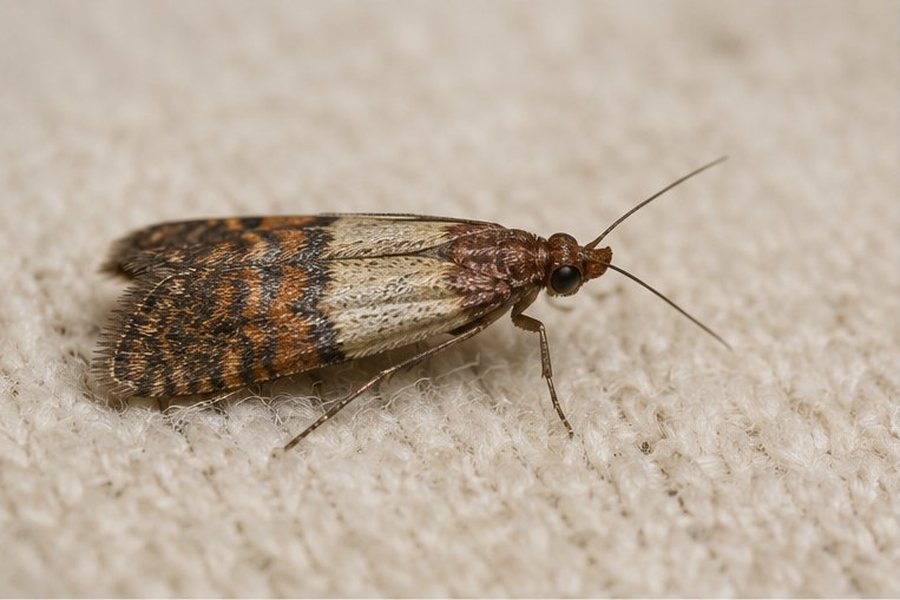
The Pattern of the Damage
Carpet moth damage is a spreading thin patch, not a scatter of holes. The pile is grazed down towards the backing over a continuous area, so the patch looks worn rather than punctured, and it has a soft irregular edge.
The giveaway is where it is. Wear happens where people walk. Moth damage happens where they do not — under a wardrobe, behind a sofa, along the edge of a room, in the corner of a spare bedroom.
Where to Look, in Order
Move the sofa and look at the carpet where it stood, especially close to the wall. Lift the carpet edge off the gripper along that wall if you can. Look under the beds and inside the floor of any fitted wardrobe. Look around the hole where a radiator pipe comes through the floor. Lift any rug that sits on top of a carpet and look at both surfaces.
Ten minutes doing that will tell you more than a fortnight of watching for moths.
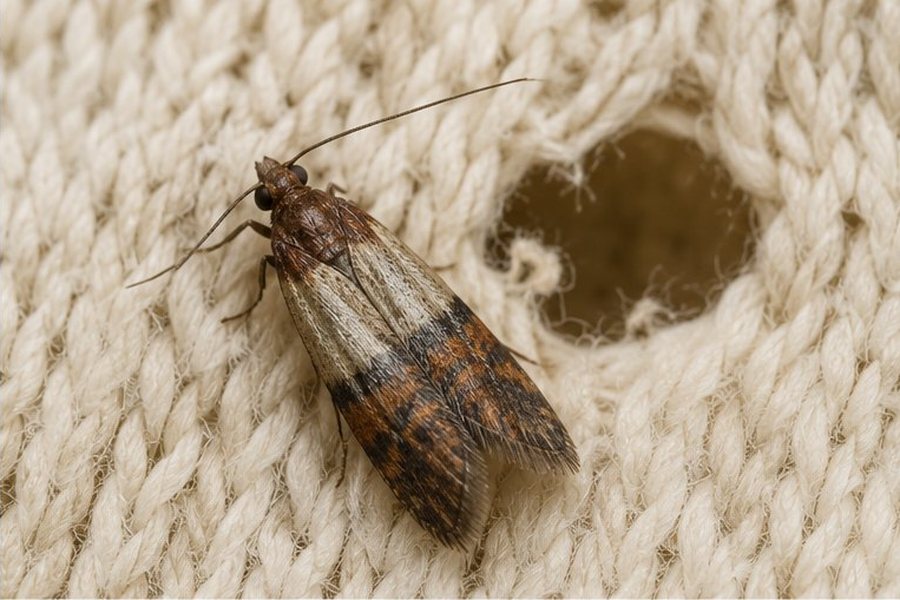
The Other Signs
Silky tubes or cases the same colour as the carpet, lying along the pile at the edge of a room. Fine sandy debris along the gripper line. And small buff-coloured moths that run and flutter low rather than flying properly to a light — they are usually seen near a skirting, not around a lampshade.
It is the larva that eats. Adults flying means eggs have already been laid somewhere, which is why the damage is usually well under way by the time you see one.
What It Is Not
Sun bleaching — that is colour loss with the pile intact, in a strip by a window. General wear — that is in the traffic lanes, is symmetrical, and does not have a soft irregular edge. Pet damage — usually pulled loops or one dug patch rather than grazing.
And carpet beetle, which is the one that genuinely gets confused. Beetle damage tends to be scattered small holes rather than one spreading patch, and the larva is short and bristly rather than a smooth pale caterpillar.
Wool Is the Test
Carpet moth larvae need keratin — wool, silk, fur, feathers. A polypropylene or nylon carpet is not food, so if the carpet is synthetic and something is damaging it, you are looking at the wrong culprit.
Check the label or the underside if you are not sure. Wool mixes are still vulnerable; a 100% synthetic carpet with a wool underlay can also be attacked from below.
Frequently Asked Questions
Is it wear or moth?
Wear is in the traffic lanes. Moth damage is where nobody walks — under and behind furniture, and along room edges.
I have seen moths but no damage. Should I worry?
Look properly under the furniture first. Adults flying means eggs have already been laid.
Can they eat a synthetic carpet?
No. They need wool, silk or fur. Check the underlay too, though.
Get a Quote for Carpet Moth Control
Tell us your postcode and what you have found. You will have a confirmed price before anything is booked.
More Carpet Moth Control Guides
The rest of the carpet moth control advice centre.
How Much Does Carpet Moth Treatment Cost in Bexley?
Read the guide →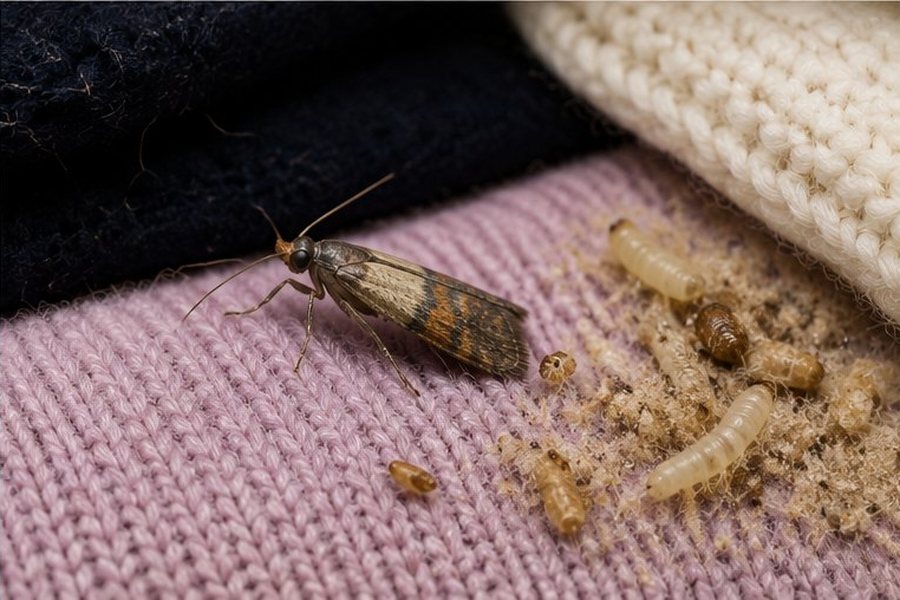
Carpet Moth Treatment Prices - £180 First Room and £60 Additional Rooms
Read the guide →Why Does Carpet Moth Damage Often Appear Under Furniture?
Read the guide →Adult Moths vs Carpet Moth Larvae - Which Actually Damages Carpets?
Read the guide →Can Carpet Moths Destroy Wool Carpets?
Read the guide →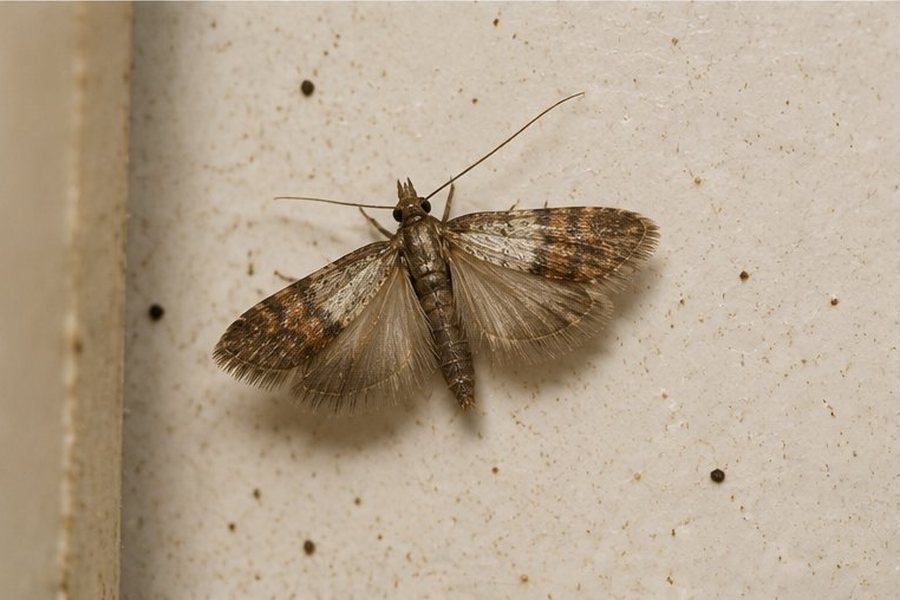
What Are the Signs of Carpet Moth Larvae Around Skirting Boards?
Read the guide →Can Carpet Moths Spread From One Room to Another?
Read the guide →Should You Replace a Carpet After Finding Carpet Moths?
Read the guide →How Can You Stop Carpet Moths Returning After Treatment?
Read the guide →Carpet Moth Control in Bexley
Bexley, Welling, Sidcup, Dartford and everywhere within roughly 10 miles of Bexley High Street. Tell us what you have found and you will have a confirmed price before anything is booked.