 1STOP Pest Control
Rat Control · Bexley
Rat Droppings vs Mouse Droppings - How to Tell the Difference
Size settles it in most cases, but shape and distribution are more reliable when you only have a couple to look at.
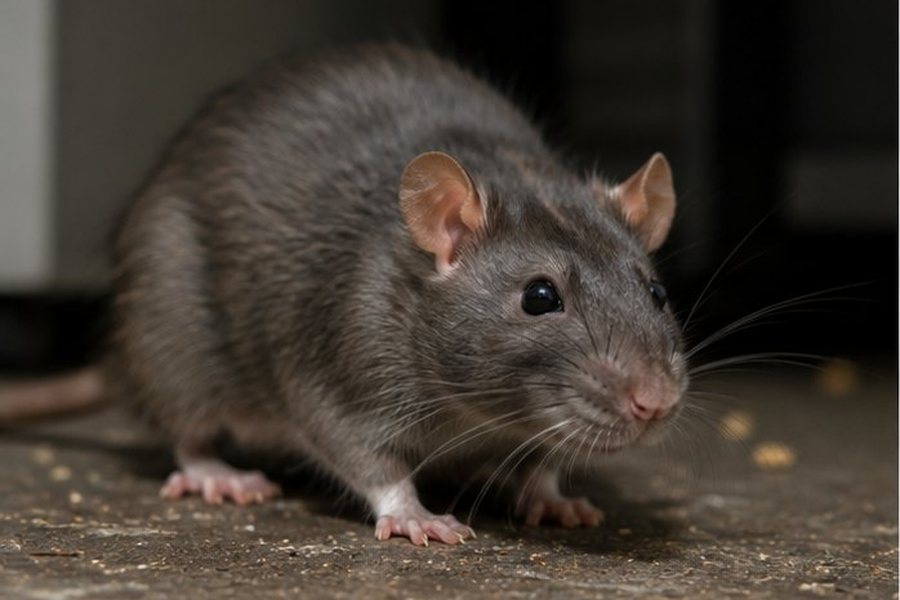
Size
Rat droppings are roughly 12 to 17mm long — comparable to an olive stone or a large grain of rice, and unmistakably substantial once you have seen one. Mouse droppings are 3 to 6mm, about the size of a grain of rice or a little smaller.
The gap between them is large enough that a single dropping usually answers the question. If you are hesitating, it is more likely to be a mouse, because a rat dropping does not leave people uncertain.
Shape
Rat droppings are tapered at one or both ends, sometimes slightly curved, and dark and shiny when fresh. Brown rat droppings are broader with blunter ends than black rat droppings, though brown rats are what you will have here.
Mouse droppings are much finer, more pointed at the ends, and often described as looking like dark grains. They dry out and crumble far more readily than rat droppings, which harden.

Distribution, Which Is the Better Test
Mice produce a great many droppings — dozens a day — scattered widely wherever they travel. Finding a scatter along a shelf, in a drawer, across the back of a cupboard and behind the units is a mouse pattern.
Rats produce fewer, larger droppings, concentrated along runs and often in latrine areas. Droppings collected in a line against a joist or a wall, or piled in one spot, is a rat pattern. Distribution tells you more than any single dropping does.
Age, and Why It Matters
Fresh droppings are dark, moist-looking and soft. Older ones are dull, grey-brown, dry and crumble when pressed with something — not with your fingers.
This matters because it separates a current problem from a historic one. A loft full of dry crumbling droppings and nothing fresh may be a record of something dealt with years ago. Clear a small area, mark it, and check in a few days: new droppings mean current activity.
Handle It Properly, and What It Changes
Do not sweep or vacuum droppings dry, which puts particles into the air. Dampen with a disinfectant solution first, pick up with gloves and a disposable cloth, bag it, and wash your hands afterwards. Ventilate a loft before working in it.
The identification changes the job: rats mean a survey of the drains and ground-level entry, at £190 for a flat or £240 for a house; mice mean the kitchen voids and the internal penetrations, at the same prices but a different search. Photograph what you find and keep a sample if you are unsure — it saves guessing on the visit.
Frequently Asked Questions
What is the quickest difference?
Size. Rat droppings are 12 to 17mm; mouse droppings are 3 to 6mm. If you are unsure, it is probably a mouse.
How do I know if they are old?
Old ones are dull, dry and crumble. Clear a marked area and check again in a few days.
Should I vacuum them up?
Not dry. Dampen with disinfectant first, then pick up with gloves and bag it.
Get a Quote for Rat Control
Tell us your postcode and what you have found. You will have a confirmed price before anything is booked.
More Rat Control Guides
The rest of the rat control advice centre.
How Much Does Rat Control Cost in Bexley?
Read the guide →
Rat Control Prices for Flats vs Houses - Why Do They Differ?
Read the guide →
What Is Included in a £190 Rat Treatment for a Flat?
Read the guide →Rats in the Loft - How Are They Getting Into Your Home?
Read the guide →How Do You Know If You Have Rats Under the Floorboards?
Read the guide →Rats in the Garden - Does It Mean They Are Living in Your House?
Read the guide →Why Do Rats Keep Coming Back After Treatment?
Read the guide →Can Rats Enter a House Through the Drains?
Read the guide →Rat Proofing a Property - Which Entry Points Should You Check?
Read the guide →Rat Control in Bexley
Bexley, Welling, Sidcup, Dartford and everywhere within roughly 10 miles of Bexley High Street. Tell us what you have found and you will have a confirmed price before anything is booked.