 1STOP Pest Control
Flea Treatment · Bexley
Where Do Flea Eggs and Larvae Hide Around the Home?
Down. Eggs fall off the animal and everything after that works its way deeper into the pile, which is exactly where a vacuum head does not reach.
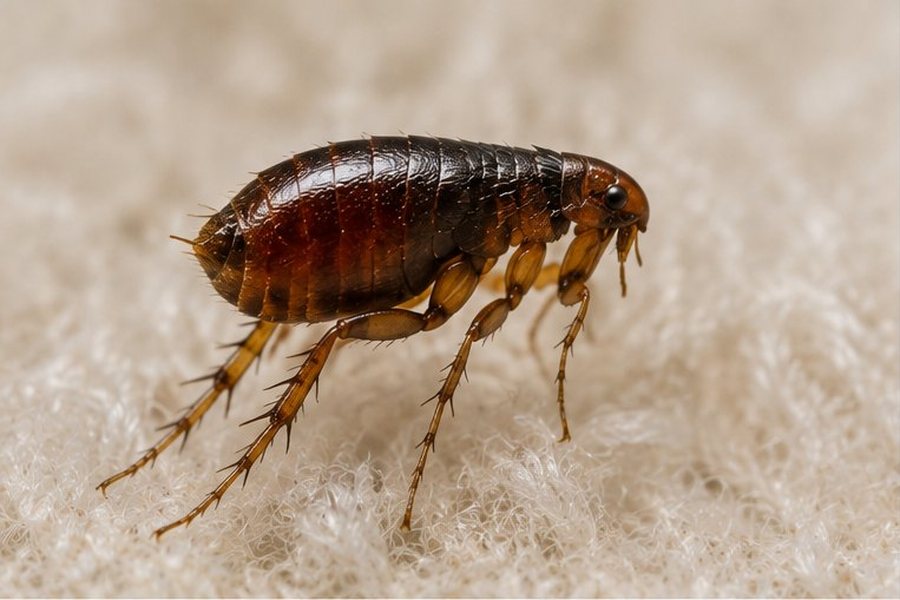
Eggs Are Designed to Fall
Flea eggs are laid on the animal and are smooth and non-sticky specifically so they drop off. Within hours they are wherever the animal has been — the bed, the chair, the hall carpet, the stairs, the car.
That is why the distribution in a house maps the pet’s habits so exactly. Follow your animal around mentally and you have drawn the map of the infestation.
Larvae Go Away From Light
Flea larvae are negatively phototactic. They actively move away from light, which drives them down into the carpet pile, into the gaps between floorboards, under furniture and along the edges of rooms.
They feed on organic debris in the pile — skin flakes, hair, and the digested blood that adults drop — so a deep pile carpet with dust in it is both shelter and food.
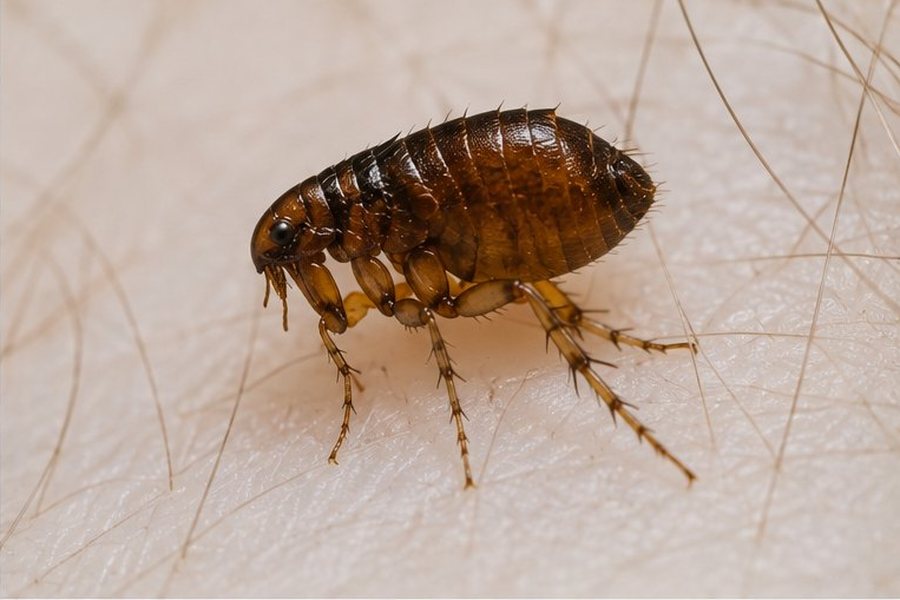
The Specific Places
The pet bed and the metre of carpet around it. The sofa: down the sides, under the cushions, under the base. The chair the animal is not supposed to use. The carpet at the room edges and over the gripper. Between floorboards and under the edge of a rug. The bottom two or three stairs. Under a radiator. And the car, if the animal travels.
Also the bedroom, if the animal sleeps on or beside a bed. People treat the living room and forget the room where the pet actually spends the night.
Why the Pupa Is the One That Matters
The pupa spins a sticky cocoon that collects fibre and dust and becomes effectively part of the carpet. It is armoured, it does not feed, and insecticide has little effect on it. It can stay dormant for months.
That is why treatments appear to fail and why fleas keep appearing afterwards. They are not surviving the treatment; they are hatching after it, into a surface that is still treated — which is exactly what you want.
What This Changes About Cleaning
Vacuum slowly, with a crevice tool along the room edges and the gripper line, under and behind furniture, down the sides of the sofa and on the stairs. Empty the cylinder into a bag and put it in the outside bin. Wash pet bedding on a hot wash.
Then keep vacuuming for a fortnight after treatment. The vibration triggers pupae to hatch into a treated surface, so it is not tidying — it is part of the treatment. Rooms are £180 for the first and £60 for each additional one.
Frequently Asked Questions
Where are the eggs?
Wherever the animal rests and walks. They are made to fall off.
Why are larvae hard to find?
They move away from light, deep into the pile and the gaps between boards.
Why keep vacuuming after treatment?
The vibration makes dormant pupae hatch into the treated surface. That is how the last of them go.
Get a Quote for Flea Treatment
Tell us your postcode and what you have found. You will have a confirmed price before anything is booked.
More Flea Treatment Guides
The rest of the flea treatment advice centre.
How Much Does Flea Treatment Cost in Bexley?
Read the guide →
Flea Treatment Prices - £180 First Room and £60 for Additional Rooms
Read the guide →
Why Do I Still Have Fleas After Treating My Pet?
Read the guide →How Do You Know If Fleas Are Living in Your Carpet?
Read the guide →Can Fleas Survive in an Empty House or Flat?
Read the guide →How Should You Prepare Your Home for Professional Flea Treatment?
Read the guide →Why Can Fleas Suddenly Appear in a Previously Empty Property?
Read the guide →Can Fleas Live in Sofas and Upholstered Furniture?
Read the guide →How Can Landlords Deal With Fleas Between Tenancies?
Read the guide →Flea Treatment in Bexley
Bexley, Welling, Sidcup, Dartford and everywhere within roughly 10 miles of Bexley High Street. Tell us what you have found and you will have a confirmed price before anything is booked.