 1STOP Pest Control
Mouse Control · Bexley
How Small a Gap Can a Mouse Get Through?
Smaller than almost anyone guesses. The limit is the skull, not the body, and once the head is through the rest follows.
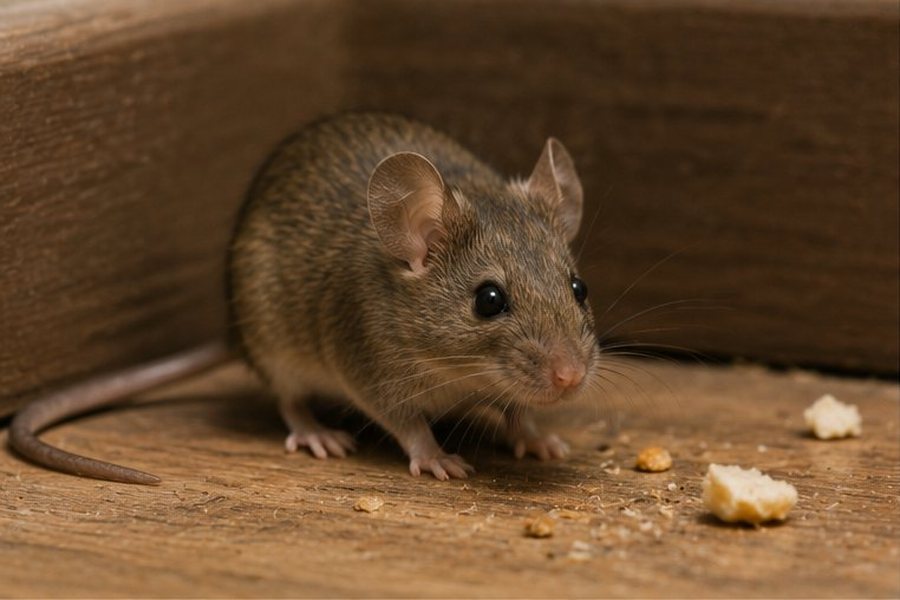
The Skull Is the Limit
A mouse has no collarbone in the way a larger animal does and its ribcage compresses considerably, so the widest rigid part of it is the skull. If the head fits, the mouse fits.
In practice that means a gap of roughly 6mm for an adult and less for a juvenile. Juveniles matter because they are the ones exploring, and a route a young mouse finds becomes a route the whole population uses.
How to Test a Gap Yourself
A standard biro is about the right diameter. If you can push a pen into a gap, treat it as a mouse entry point. A pencil is a slightly more generous test and still worth using on anything you are unsure about.
Hold a torch at a shallow angle to the surface rather than straight at it. Gaps that are invisible head-on throw a clear shadow when the light rakes across them, which is how you find the ones behind a pipe or under a unit.
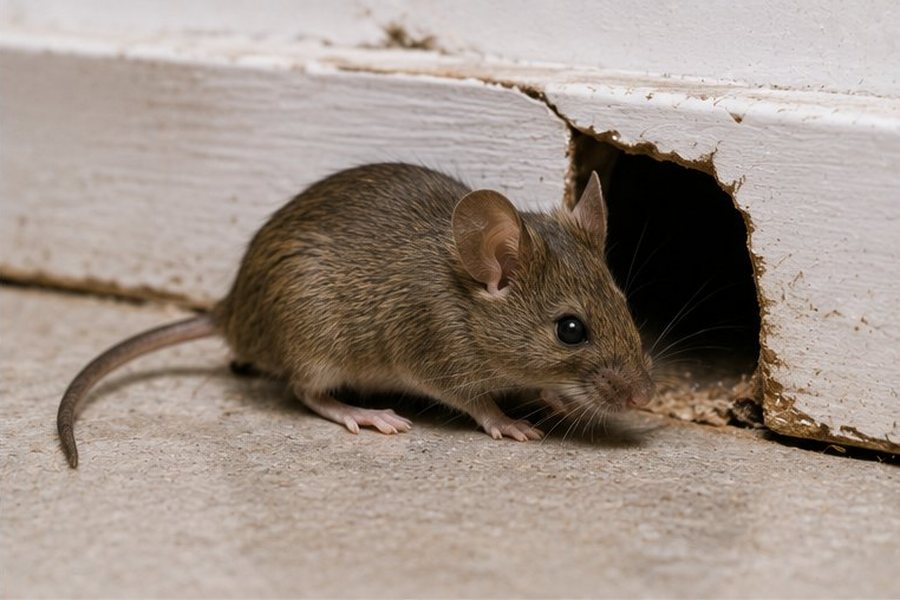
It Is Not Only About the Gap Being Small
Mice also gnaw, so a gap that is currently too small is not permanently too small. Softwood, plastic pipe, expanding foam, plaster and thin render are all things a mouse will enlarge if there is a reason to.
That is why proofing has to be done with something they cannot work on — metal mesh, mortar, or a plate correctly fitted — rather than something that simply fills the space.
And They Climb
Height is no protection. Mice climb brickwork, cables, pipes and the inside of cavity walls without difficulty, and they routinely get in at first-floor level and above.
In a flat, that means a gap around a service riser three floors up is as much of an entry point as anything at ground level. People check the doors and skirting and never look at the boxing in the hall cupboard.
Where the 6mm Gaps Actually Are
Around the waste and supply pipes under the sink. Behind the boiler where the pipework passes through. Where a cooker hood duct goes through the wall. At the meter and telecoms cable entries. Under a garage or side door. In damaged air brick grilles. At the joint where an extension meets the original brickwork.
Almost all of those exist in almost every house. Which is why proofing is a survey and an hour of work rather than a single repair, and why it is priced at £180 for up to an hour rather than per hole.
Frequently Asked Questions
How small is small enough?
About 6mm for an adult, less for a juvenile. If a biro fits, a mouse fits.
Can they make a small gap bigger?
Yes. They gnaw softwood, plastic, foam and plaster, which is why proofing needs metal or mortar.
Do I need to worry about upstairs?
Yes. Mice climb well, and in flats the risers matter as much as anything at ground level.
Get a Quote for Mouse Control
Tell us your postcode and what you have found. You will have a confirmed price before anything is booked.
More Mouse Control Guides
The rest of the mouse control advice centre.
How Much Does Mouse Control Cost in Bexley?
Read the guide →
Mouse Control Prices - £190 for Flats and £240 for Houses Explained
Read the guide →
What Does a Professional Mouse Treatment Include?
Read the guide →Mice Behind Kitchen Units - What Should You Do?
Read the guide →Scratching in the Walls at Night - Could It Be Mice?
Read the guide →Why Do Mice Keep Returning to the Same Property?
Read the guide →Can Mice Travel Between Flats in the Same Building?
Read the guide →Where Should You Look for Mouse Droppings in Your Home?
Read the guide →Mouse Proofing - How to Stop Mice Getting Back Inside
Read the guide →Mouse Control in Bexley
Bexley, Welling, Sidcup, Dartford and everywhere within roughly 10 miles of Bexley High Street. Tell us what you have found and you will have a confirmed price before anything is booked.