 1STOP Pest Control
Wasp Nest Treatment · Bexley
Should You Block the Entrance to a Wasp Nest?
No — and of everything people try themselves, this is the one that most reliably makes things worse. It is worth understanding why.
What You Think Happens
The reasoning is sensible enough: seal the hole, the wasps cannot get out or in, the problem is contained. People fill an air brick, foam a soffit gap, or tape over a hole under a tile.
It is the most common piece of DIY wasp control there is, and it is close to the most reliably counterproductive.
What Actually Happens
You have not trapped them. You have removed their exit while leaving several hundred to several thousand agitated wasps in a void inside your building, and wasps chew. They chew wood, plaster and thin materials without much difficulty.
They then leave by the path of least resistance, which from a wall cavity or a roof void is usually inwards: through a socket or switch back box, around a downlight, at a pipe entry, through a gap at a skirting, or straight through plasterboard. Wasps in the bedroom is the standard outcome.
And the Ones Outside Do Not Leave
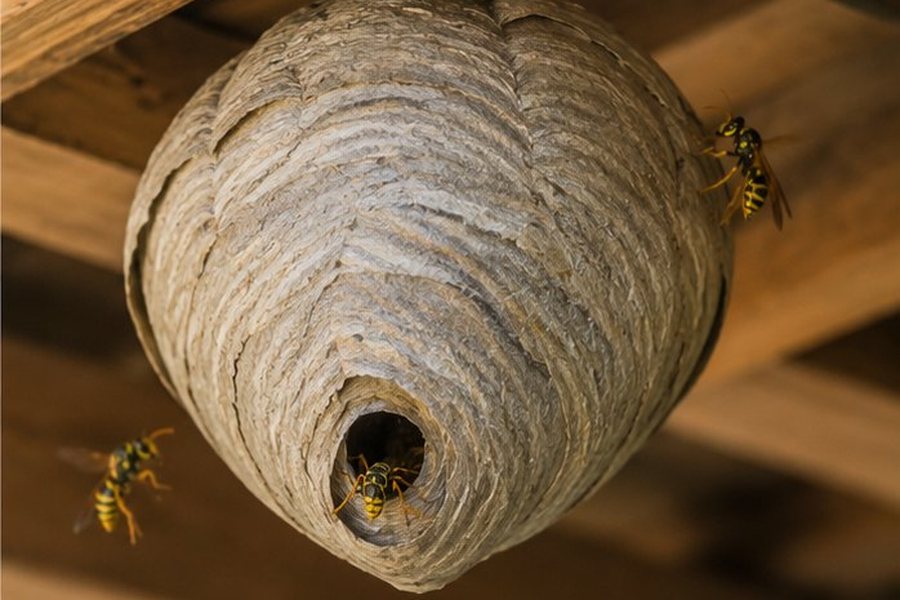
Foragers away from the nest when you sealed it come back and cannot get in. They mass at the blocked entrance, become highly defensive, and stay in that area rather than dispersing.
So you get the worst of both: an agitated colony working its way into the house, and a crowd of defensive wasps outside the point you sealed. Anyone using that door or window is more likely to be stung than before you started.
It Also Makes the Treatment Harder
Treatment relies on the entrance being open, because it goes to the entrance and the wasps carry it into the nest. Seal it and the route the treatment uses is gone.
A nest whose entrance has been blocked often means finding the new opening they have chewed, which may be inside your house. It is still £90 and it is still guaranteed, but it is a considerably less pleasant job for everybody.
What to Do Instead
Leave the entrance open. Keep away from it and out of the flight line, keep windows on that side shut on warm days, keep the loft hatch closed, and keep children and pets away from that part of the garden.
Then have it treated. Activity drops within hours and returning foragers continue for two or three days, which is normal. Once the season is over and the colony is dead, closing the opening is worth doing so next spring’s queens choose elsewhere — but that is a winter job, not a live one.
Frequently Asked Questions
What happens if I block it?
They chew out through the path of least resistance, which from a cavity or loft is usually into the house.
What about the wasps that were outside?
They mass at the blocked entrance and become far more defensive.
When can I seal the hole?
In winter, once the colony is dead. Never while a nest is active.
Get a Quote for Wasp Nest Treatment
Tell us your postcode and what you have found. You will have a confirmed price before anything is booked.
More Wasp Nest Treatment Guides
The rest of the wasp nest treatment advice centre.
How Much Does Wasp Nest Removal Cost in Bexley?
Read the guide →
£90 Fixed-Cost Wasp Nest Treatment - What Is Included?
Read the guide →
Is Professional Wasp Nest Treatment Guaranteed?
Read the guide →How Do You Find a Wasp Nest Around Your Property?
Read the guide →Wasps Going Under Roof Tiles - Does This Mean There Is a Nest?
Read the guide →Can You Leave a Wasp Nest Alone Until Winter?
Read the guide →Wasp Nest in a Loft - What Should You Do?
Read the guide →Wasp Nest in a Wall Cavity - Can It Be Treated?
Read the guide →Why Do Wasps Keep Flying Around the Same Part of My House?
Read the guide →Wasp Nest Treatment in Bexley
Bexley, Welling, Sidcup, Dartford and everywhere within roughly 10 miles of Bexley High Street. Tell us what you have found and you will have a confirmed price before anything is booked.