 1STOP Pest Control
Wasp Nest Treatment · Bexley
Wasp Nest in a Wall Cavity - Can It Be Treated?
Yes, routinely, and without opening anything up. Cavity nests are one of the most common jobs we do and one of the ones people worry about most unnecessarily.
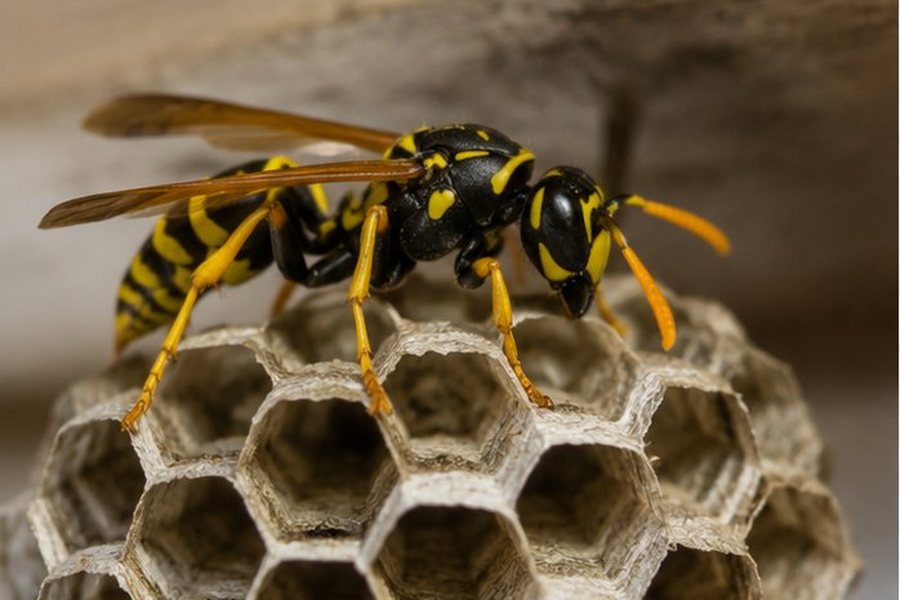
How They Get Into a Cavity
Through whatever small opening exists in the outer leaf: a weep hole between bricks, a gap in eroded mortar, a damaged air brick, the gap around a pipe or cable entry, a crack in render, or the joint where an extension meets the original wall.
Once inside, the cavity is dry, sheltered, insulated and completely undisturbed. From a wasp’s point of view it is an excellent site, which is why we see so many.
You Do Not Need to See It
The nest may be a metre or more from the opening, and it will never be visible. That changes nothing. Treatment is applied at the entry point the wasps are using, and returning wasps take it in to the colony with them.
So there is no opening up brickwork, no drilling, no removing bricks and no scaffolding. It is a £90 fixed-cost job like any other nest, and it is guaranteed the same way.
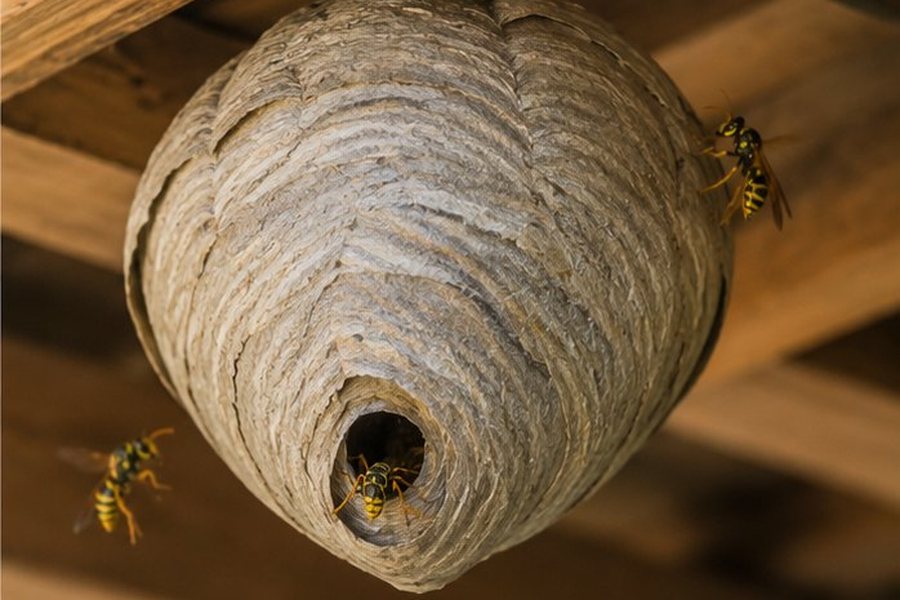
Do Not Fill the Hole
This is the one that causes real trouble. Sealing the entrance does not trap them — it removes their exit, and several hundred wasps will chew and push through the path of least resistance instead.
In a cavity wall that path is inwards: through the inner leaf at a socket back box, a light switch, a pipe penetration, the gap at a skirting or a crack in plaster. Wasps in the bedroom is the usual result, and it is entirely avoidable. Leave the hole open until it is treated.
If Wasps Are Already Coming Into the Room
It usually means an internal gap somewhere — commonly around a socket or switch on an external wall, at a downlight, or where a pipe enters. Shut the door of that room, open the window, and let the ones inside leave.
Tape over the internal gap temporarily if you can identify it, but never seal the outside entrance. Keep the room shut and treat it as urgent rather than something to watch for a week.
Afterwards
The nest stays where it is and that is fine — it decays, it is never reused, and it causes no problem in a cavity. There is no need to open anything up to remove it.
Once the season is over, closing the original opening is worth doing so that next spring’s queens choose somewhere else. Repointing, a mesh over a damaged air brick, or sealing a pipe entry does it. Do that in winter, never while a nest is active.
Frequently Asked Questions
Do you have to open up the wall?
No. It goes on at the opening and the wasps take it in themselves.
Can I fill the hole myself?
Please do not. They chew through the inner leaf instead and end up in the room.
Does the nest need removing from the cavity?
No. It decays in place and is never reused.
Get a Quote for Wasp Nest Treatment
Tell us your postcode and what you have found. You will have a confirmed price before anything is booked.
More Wasp Nest Treatment Guides
The rest of the wasp nest treatment advice centre.
How Much Does Wasp Nest Removal Cost in Bexley?
Read the guide →
£90 Fixed-Cost Wasp Nest Treatment - What Is Included?
Read the guide →
Is Professional Wasp Nest Treatment Guaranteed?
Read the guide →How Do You Find a Wasp Nest Around Your Property?
Read the guide →Wasps Going Under Roof Tiles - Does This Mean There Is a Nest?
Read the guide →Can You Leave a Wasp Nest Alone Until Winter?
Read the guide →Wasp Nest in a Loft - What Should You Do?
Read the guide →Should You Block the Entrance to a Wasp Nest?
Read the guide →Why Do Wasps Keep Flying Around the Same Part of My House?
Read the guide →Wasp Nest Treatment in Bexley
Bexley, Welling, Sidcup, Dartford and everywhere within roughly 10 miles of Bexley High Street. Tell us what you have found and you will have a confirmed price before anything is booked.