 1STOP Pest Control
Ant Control · Bexley
Ants Coming Through Patio Doors - Where Is the Nest Likely to Be?
Almost always within a few metres of the door, under something hard and flat. Patio doors are the single most common entry point we attend, and the reason is what is outside them.
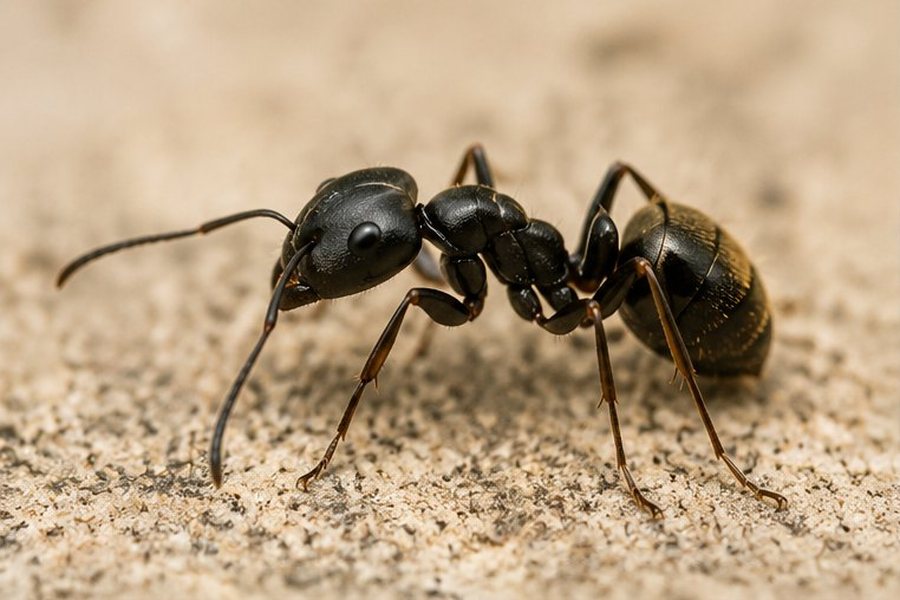
What Is Under a Patio
Paving is laid on sand or a dry mix, over hardcore, over soil. That is close to ideal for a black garden ant: excellent drainage, easy tunnelling, and a solid slab above it that holds the sun’s heat well into the evening.
Warmth is the part people underestimate. A south-facing patio is several degrees warmer than open ground, which speeds up brood development and lets a colony grow larger than it would elsewhere in the same garden.
The Signs Directly Outside the Door
Fine granular soil pushed up between the paving joints — small heaps of what looks like sand. Mortar or jointing compound washing or crumbling out of the same joints repeatedly. Slabs that have started to rock slightly.
Then watch the trail. In the warm part of the day the column will be obvious, and following it will normally take you to a joint, the edge of the slab run, or the gap where the paving meets the house.

The Other Usual Locations
Under a doorstep or threshold slab. Along the base of the wall where the patio meets the house, particularly if there is a gap at the damp course. Under decking. Beneath a planter or a pot that has not been moved. At the edge of the lawn where it meets the paving. Under a garden path.
Effectively: anything flat, warm and undisturbed with soil beneath it. If you lift one thing in the garden, lift the slab nearest the door.
Why They Come Through the Door Specifically
The track of a sliding patio door is an almost perfect entry route — a continuous gap, sheltered, running the width of the opening, with drainage slots straight through to the outside. French doors leak at the threshold and at the meeting stiles.
And it is the shortest route from a warm slab to a kitchen. The nest does not have to be far away, and it rarely is.
What to Do About It
Do not spray the trail. It kills what is on the surface, leaves the colony intact and stops gel bait working. Gel bait relies on foragers carrying it home, which is exactly the journey you have just traced.
Deal with the nest, then close the route: brush strips or a threshold seal on the door, and repointing the paving joints once the colony is gone. Ant treatment is £190 for a flat and £220 for a house.
Frequently Asked Questions
Where is the nest likely to be?
Under the paving nearest the door, usually within a few metres. Look for fine soil pushed up between the joints.
Why patio doors rather than other doors?
The sliding track is a continuous sheltered gap, and it is the shortest route from a warm slab to the kitchen.
Should I repoint the paving?
Yes, but after the colony is dealt with. Doing it first just moves them.
Get a Quote for Ant Control
Tell us your postcode and what you have found. You will have a confirmed price before anything is booked.
More Ant Control Guides
The rest of the ant control advice centre.
How Much Does Professional Ant Control Cost in Bexley?
Read the guide →
Ant Treatment Prices - £190 for Flats and £220 for Houses
Read the guide →
Why Do Ants Keep Appearing in the Kitchen?
Read the guide →How Do You Find Where Ants Are Entering Your House?
Read the guide →Why Does Killing the Ants You Can See Not Solve the Problem?
Read the guide →Can Ants Nest Inside Walls and Under Floors?
Read the guide →Why Do Ant Problems Get Worse During Warm Weather?
Read the guide →How Do Professional Pest Controllers Deal With an Ant Colony?
Read the guide →How Can You Prevent Ants Returning After Treatment?
Read the guide →Ant Control in Bexley
Bexley, Welling, Sidcup, Dartford and everywhere within roughly 10 miles of Bexley High Street. Tell us what you have found and you will have a confirmed price before anything is booked.