 1STOP Pest Control
Ant Control · Bexley
Why Do Ant Problems Get Worse During Warm Weather?
Because ants are cold-blooded, and everything they do runs at the speed of the temperature. Warm weather does not create ants — it turns up the volume on a colony that was already there.
Temperature Sets the Pace
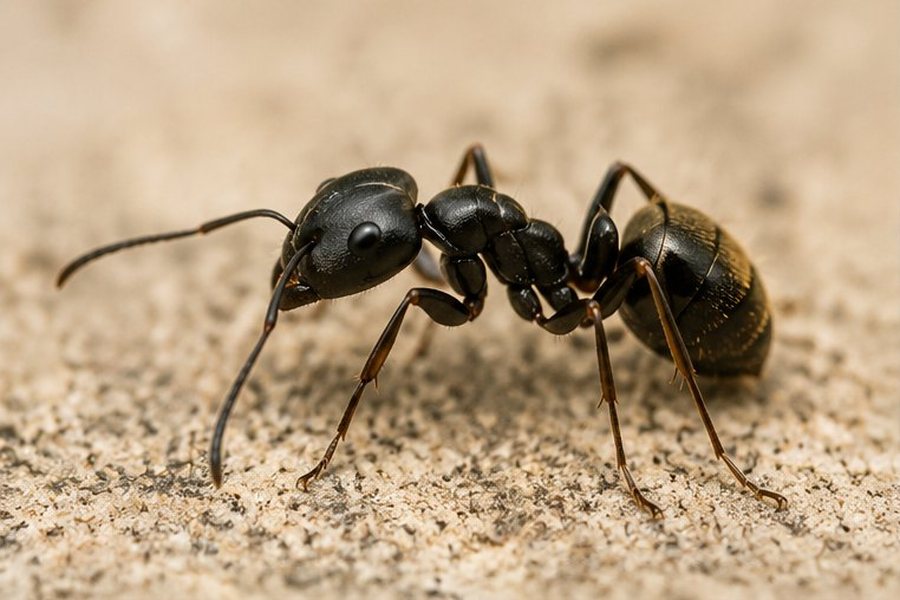
Ants are ectothermic: their metabolism, their walking speed, their foraging rate and their brood development all rise with temperature. A colony that sent out a trickle of foragers in April sends out a stream in July.
The colony has not necessarily grown much between those two months. What has changed is how much of it you can see.
The Year in a Colony
Winter: dormant, deep in the nest, no foraging. Early spring: the queen resumes laying and the first foragers appear on warm days. Late spring into early summer: brood demand is high and the colony wants protein.
Midsummer: peak workforce, peak foraging, and a strong preference for sugars. Late summer into autumn: activity falls away and the colony provisions itself for winter. That protein-then-sugar shift is why the thing they suddenly love in July is not what they wanted in May.
Why Dry Spells Bring Them Indoors
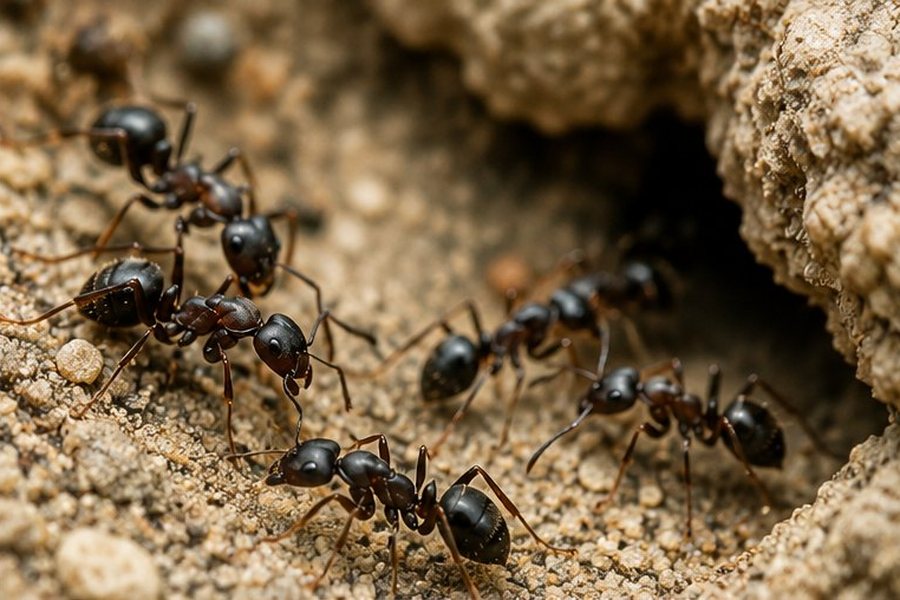
Two reasons. A prolonged dry spell reduces the aphid honeydew and moisture available outside, so foragers range further and are more likely to end up in a kitchen. And they come in for water as much as food — a sink, a pet bowl, a shower tray, condensation under a washing machine.
Heavy rain does the opposite in the short term: it floods surface tunnels and pushes activity up and out, which is why a sudden indoor column sometimes follows a downpour rather than a heatwave.
The Flying Ants
Usually a few days in July, occasionally into August, and triggered by warmth and humidity after rain, which is why it happens across a whole area at once. These are new queens and males leaving established nests to mate.
It is not an infestation and it does not need treating. Almost all of those ants die within a day or two. What it does tell you is that there is a mature colony very close by, which is worth knowing if you have also had trails indoors.
What to Do About the Seasonal Version
Deal with it in the season it happens, because a colony treated in July does not come back in August. Waiting for it to pass means doing the same thing again next summer.
And do not spray the trails. It breaks the route gel bait depends on and leaves the colony intact, so the problem returns in a slightly different place a week later. Treatment is £190 for a flat and £220 for a house.
Frequently Asked Questions
Do warm summers create more ants?
Not really. They make an existing colony far more active and far more visible.
Why do they come in during a dry spell?
For water as much as food, and because there is less to forage outside.
Do flying ants need treating?
No. They last a day or two. But they mean a mature nest is close by.
Get a Quote for Ant Control
Tell us your postcode and what you have found. You will have a confirmed price before anything is booked.
More Ant Control Guides
The rest of the ant control advice centre.
How Much Does Professional Ant Control Cost in Bexley?
Read the guide →
Ant Treatment Prices - £190 for Flats and £220 for Houses
Read the guide →
Why Do Ants Keep Appearing in the Kitchen?
Read the guide →How Do You Find Where Ants Are Entering Your House?
Read the guide →Why Does Killing the Ants You Can See Not Solve the Problem?
Read the guide →Ants Coming Through Patio Doors - Where Is the Nest Likely to Be?
Read the guide →Can Ants Nest Inside Walls and Under Floors?
Read the guide →How Do Professional Pest Controllers Deal With an Ant Colony?
Read the guide →How Can You Prevent Ants Returning After Treatment?
Read the guide →Ant Control in Bexley
Bexley, Welling, Sidcup, Dartford and everywhere within roughly 10 miles of Bexley High Street. Tell us what you have found and you will have a confirmed price before anything is booked.