 1STOP Pest Control
Ant Control · Bexley
How Do Professional Pest Controllers Deal With an Ant Colony?
By using the ants against the colony. The method looks like doing nothing for two days, and that delay is the entire point.
The Survey Comes First
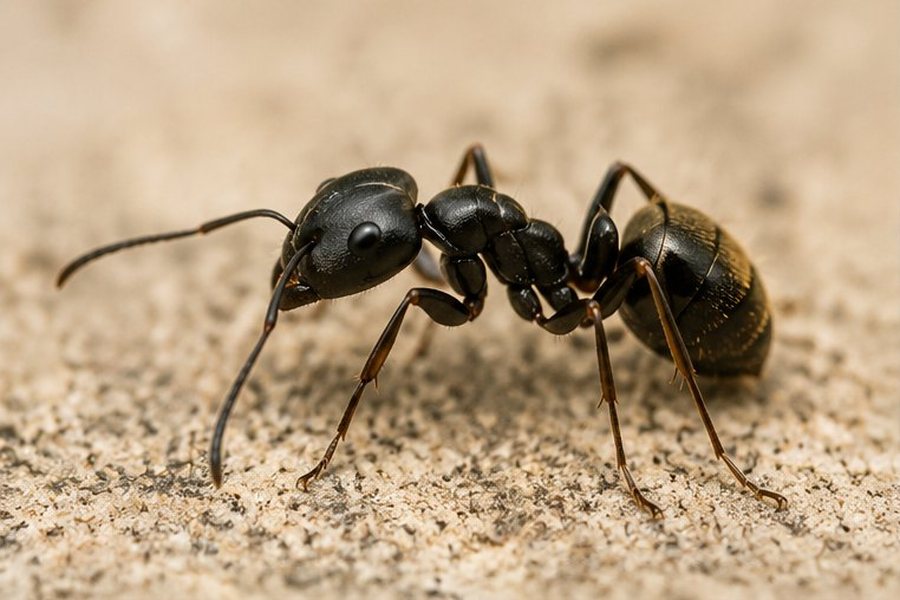
Finding the nest, or at least the route to it, changes everything. The technician follows the trails outwards — through the entry point, along the base of the wall, across the paving — to establish where the colony actually is.
That also determines what you have. Black garden ants nesting outside are one job; pharaoh ants nesting in a warm building void are a different one, and treating the second like the first makes it considerably worse.
Trophallaxis: Why the Method Works
Ants feed each other mouth to mouth, passing food through the colony. A forager that takes gel bait carries it home and distributes it to workers that never leave the nest, then to the brood and eventually to the queen.
That is the mechanism, and it is the only practical way to reach a queen who is underground and never comes out. It is also why the bait has to be slow-acting: anything that killed on contact would stop at the first ant and never travel.
Why the Trail Is Left Alone
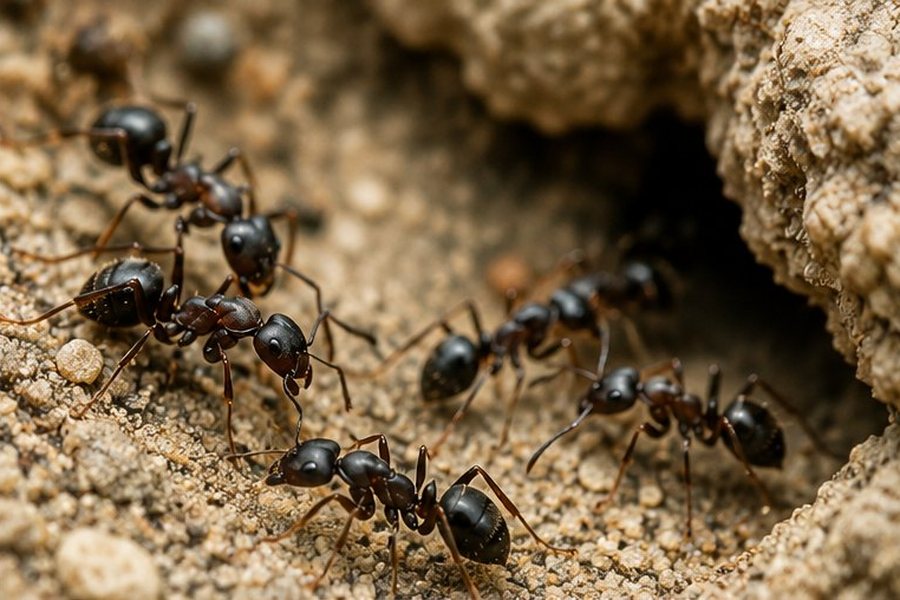
Because the trail is the delivery route. Spraying it, cleaning it or moving the bait breaks the mechanism, which is why we ask people not to tidy up during treatment and why a customer who has been spraying for a fortnight has made the job harder rather than easier.
It also means an effective treatment looks wrong for the first day or two. More ants at the bait, not fewer, is a sign it is working.
Placement, Not Volume
Bait goes on the trail and at the entry points, in small quantities, out of reach of children and pets, and in more than one formulation where the colony’s preference is unclear — ants want protein at some points in the season and sugars at others.
Where the nest itself is accessible, it can be treated directly. Where it is under a patio or a solid floor, the bait route is the only realistic option, which is why finding the trail matters more than finding the nest.
What You Should See, and When
Days one and two: heavy activity at the bait. Days three to seven: activity falling away as the colony declines. Beyond that: nothing, or a sharply reduced trickle that stops.
If a strong trail is still running after ten days, tell us — it usually means a second colony rather than a failed treatment, and that is worth knowing. Ant treatment is £190 for a flat and £220 for a house. Once it is finished, wash the whole run with hot soapy water so nothing follows the old trail next summer.
Frequently Asked Questions
Why is the bait slow?
So foragers survive long enough to carry it home. Anything faster would never reach the queen.
Why are there more ants after treatment starts?
They are feeding at the bait and taking it back. That is the treatment working.
Should I clean the trail during treatment?
No. The trail is the delivery route. Clean it once the colony is gone.
Get a Quote for Ant Control
Tell us your postcode and what you have found. You will have a confirmed price before anything is booked.
More Ant Control Guides
The rest of the ant control advice centre.
How Much Does Professional Ant Control Cost in Bexley?
Read the guide →
Ant Treatment Prices - £190 for Flats and £220 for Houses
Read the guide →
Why Do Ants Keep Appearing in the Kitchen?
Read the guide →How Do You Find Where Ants Are Entering Your House?
Read the guide →Why Does Killing the Ants You Can See Not Solve the Problem?
Read the guide →Ants Coming Through Patio Doors - Where Is the Nest Likely to Be?
Read the guide →Can Ants Nest Inside Walls and Under Floors?
Read the guide →Why Do Ant Problems Get Worse During Warm Weather?
Read the guide →How Can You Prevent Ants Returning After Treatment?
Read the guide →Ant Control in Bexley
Bexley, Welling, Sidcup, Dartford and everywhere within roughly 10 miles of Bexley High Street. Tell us what you have found and you will have a confirmed price before anything is booked.