 1STOP Pest Control
Ant Control · Bexley
Can Ants Nest Inside Walls and Under Floors?
Usually not, and that is the honest answer — the great majority of ant problems come from a nest outside. But it does happen, and it looks different.
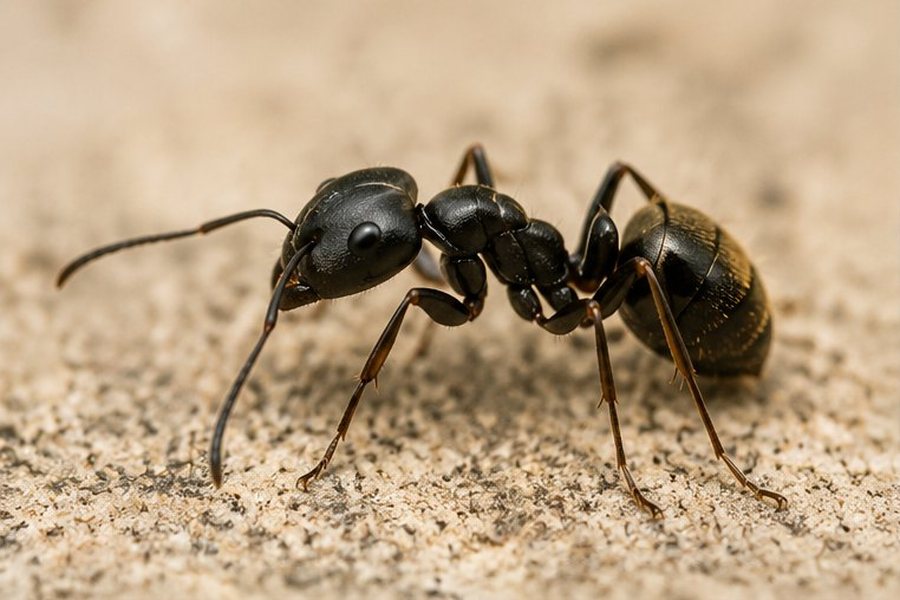
The Normal Case: Outside
Black garden ants, which are the overwhelming majority of our domestic calls, nest in soil — under paving, at the base of a wall, under a step, in a border or a lawn. They come inside to forage and go home again.
So a trail across the kitchen is not evidence of a nest in the kitchen. It is evidence of a road, and the road has two ends.
When They Do Nest Inside
Warm dry voids with a way in and a food supply within reach: a cavity wall, particularly against a south-facing elevation; under a suspended floor; behind boxing near a boiler or a hot pipe; in wall insulation; and occasionally in an airing cupboard.
A nest under a conservatory or a solid floor is common and sits in a grey area — technically outside the building, in the sand or hardcore beneath the slab, but functionally indoors.

How to Tell the Difference
A trail from an outside nest goes somewhere. Follow it in the warm part of the day and it leads to a door threshold, a window, a pipe entry or a crack in the wall, and continues outside.
An indoor nest does not. The trail emerges from one point and disperses, activity continues in cold or wet weather when outdoor ants would be quiet, and you may find winged ants indoors well outside the usual July flying-ant window. Fine debris or soil appearing from a crack indoors is the strongest sign of all.
The Species That Genuinely Live Indoors
Pharaoh ants are a different proposition entirely. They are very small, yellow-brown, tropical, and they nest in warm building voids all year round — hospitals, blocks of flats, anywhere heated continuously. They do not need to go outside at all.
They also matter because spraying them causes budding: the colony splits and scatters into new nests through the building, turning one problem into several. If a small yellowish ant is active indoors in midwinter, it should be identified before anything is applied to it.
What Changes About the Treatment
The principle is the same — slow-acting gel bait carried back by the foragers, never a spray — but the placement changes, and an indoor nest means treating the void rather than the route.
Which is why the survey comes first. Ant treatment is £190 for a flat and £220 for a house, and part of what that buys is somebody establishing which of these you actually have before putting anything down.
Frequently Asked Questions
Is the nest in my wall?
Usually not. Most domestic ant problems come from a nest outside, under paving or at the base of a wall.
What is the strongest sign of an indoor nest?
Fine soil or debris appearing from a crack indoors, and activity that continues in cold wet weather.
Why does spraying matter with pharaoh ants?
It makes the colony split and scatter into new nests through the building.
Get a Quote for Ant Control
Tell us your postcode and what you have found. You will have a confirmed price before anything is booked.
More Ant Control Guides
The rest of the ant control advice centre.
How Much Does Professional Ant Control Cost in Bexley?
Read the guide →
Ant Treatment Prices - £190 for Flats and £220 for Houses
Read the guide →
Why Do Ants Keep Appearing in the Kitchen?
Read the guide →How Do You Find Where Ants Are Entering Your House?
Read the guide →Why Does Killing the Ants You Can See Not Solve the Problem?
Read the guide →Ants Coming Through Patio Doors - Where Is the Nest Likely to Be?
Read the guide →Why Do Ant Problems Get Worse During Warm Weather?
Read the guide →How Do Professional Pest Controllers Deal With an Ant Colony?
Read the guide →How Can You Prevent Ants Returning After Treatment?
Read the guide →Ant Control in Bexley
Bexley, Welling, Sidcup, Dartford and everywhere within roughly 10 miles of Bexley High Street. Tell us what you have found and you will have a confirmed price before anything is booked.