 1STOP Pest Control
Carpet Beetle Control · Bexley
What Do Carpet Beetle Larvae Look Like?
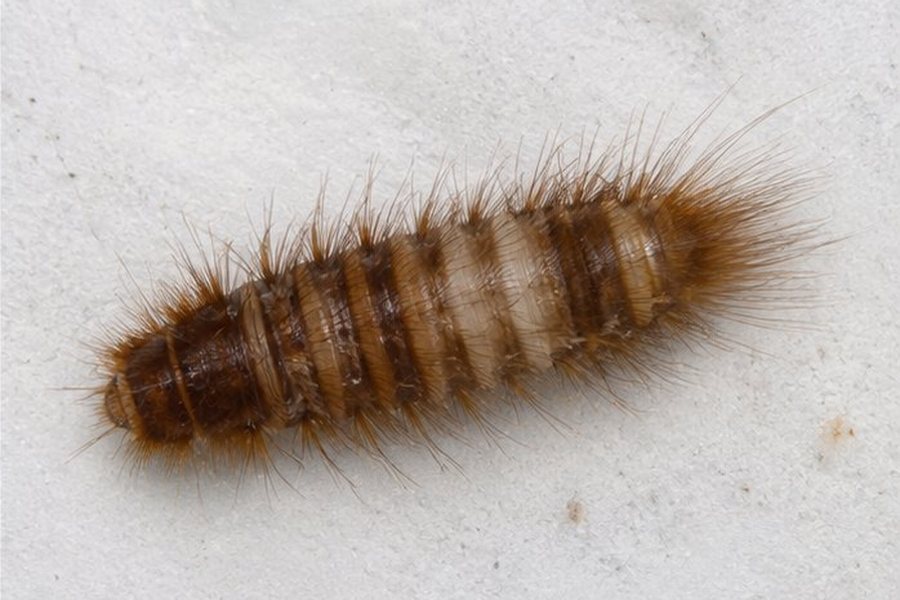
Small, short, bristly and banded, and they curl up when you touch them. Once you have seen one you will not mistake it for anything else.
The Description
Between about 4 and 5mm when fully grown, and considerably smaller when young. Short and stout rather than long — more of a woodlouse shape than a caterpillar shape. Banded in alternating light and dark stripes across the body.
The bristles are the giveaway: stiff hairs covering the body, often with a longer tuft at the rear end. The common name for them is woolly bears, which describes them accurately.
How They Behave
They move slowly and avoid light, so you find them by looking rather than by noticing movement. Disturbed, they curl up into a tight comma shape and stay still.
They are always near their food and rarely out in the open. If one is visible on a carpet surface, there is usually a concentration nearby — under the furniture, along the gripper, or inside the wardrobe alongside.
The Shed Skins, Which You Will Find More Of
Larvae moult repeatedly as they grow and the shed skins persist for a very long time. They look like pale hollow versions of the larva, still bristly, and they are brittle.
In most properties the skins outnumber the live larvae by a wide margin, and they are frequently the first thing found — in a wardrobe floor, a drawer back, or the fluff under a bed. Skins confirm what it is; they do not confirm it is still active.
What People Mistake Them For
Carpet moth larvae, which are the important one to get right: those are smooth, pale and caterpillar-shaped, often inside a silky case, and have no bristles at all. Bristly and banded means beetle.
Also woodlice, which are grey, segmented, hard-shelled and much larger; silverfish, which are fast, shiny and taper to a tail; and clothes moth cases, which look like grains of fluff. Fabric fluff and pet hair account for a good number of false alarms.
What to Do If You Find One
Keep it. A couple of larvae or shed skins in a sealed clear bag lets the technician confirm the identification on the day, and it matters because beetle and moth are treated differently and have different sources.
Then note exactly where it came from and search outwards: wardrobe floors, drawer backs, under the bed, carpet edges over the gripper, under rugs. And look in the loft — a bird nest or old wool up there is the commonest source of a recurring beetle problem. Treatment is £180 for the first room and £60 for each additional one.
Frequently Asked Questions
How big are they?
About 4 to 5mm fully grown, and much smaller when young.
How do I tell them from moth larvae?
Bristles. Beetle larvae are bristly and banded and curl up. Moth larvae are smooth and pale.
I only found shed skins. Does that count?
It confirms the species but not that anything is still alive. Fresh damage or a live larva settles it.
Get a Quote for Carpet Beetle Control
Tell us your postcode and what you have found. You will have a confirmed price before anything is booked.
More Carpet Beetle Control Guides
The rest of the carpet beetle control advice centre.
How Much Does Carpet Beetle Treatment Cost in Bexley?
Read the guide →
Carpet Beetle Treatment Prices - £180 First Room and £60 Additional Rooms
Read the guide →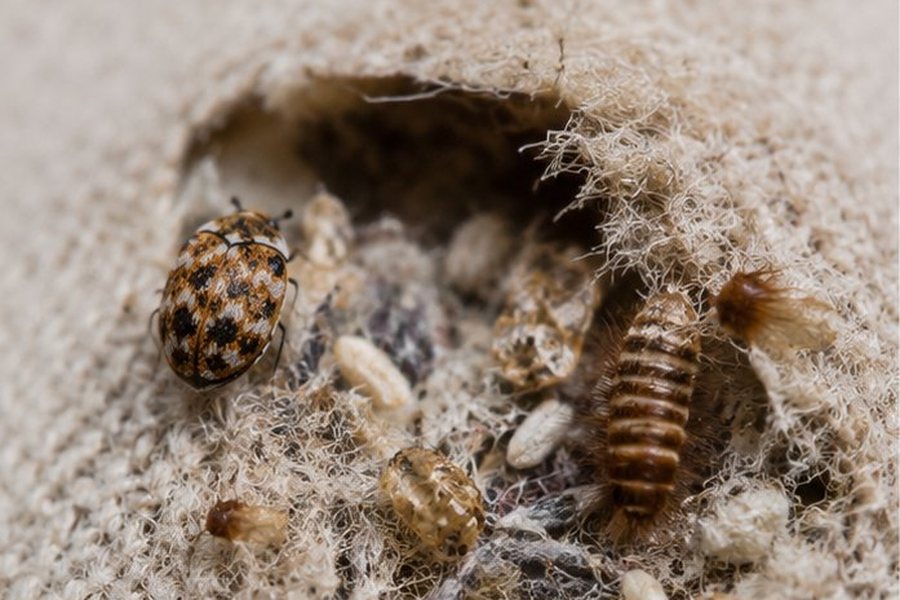
How Do You Know If You Have Carpet Beetles?
Read the guide →Carpet Beetles vs Carpet Moths - What's Damaging Your Carpet?
Read the guide →Where Do Carpet Beetle Larvae Hide Inside a House?
Read the guide →Why Are Carpet Beetles Often Found Around Windows?
Read the guide →Can Carpet Beetles Damage Clothes and Furniture as Well as Carpets?
Read the guide →Why Do Carpet Beetles Keep Appearing After Cleaning?
Read the guide →How Can You Prevent Another Carpet Beetle Infestation?
Read the guide →Carpet Beetle Control in Bexley
Bexley, Welling, Sidcup, Dartford and everywhere within roughly 10 miles of Bexley High Street. Tell us what you have found and you will have a confirmed price before anything is booked.